

Erasmus Reunion: Why It's So Hard to Organize (And Why It's Always Worth It)
"We'll meet again soon."
Everyone says it on the last day of Erasmus. Standing at the airport, hugging people you didn't even know six months ago but who now feel like family. You say it and you mean it. You genuinely believe that in a few weeks, maybe a couple of months, you'll all be together again somewhere in Europe, picking up exactly where you left off.
Then life happens.
Everyone goes back to their own country, their own routine, their own language. The group chat that used to get 200 messages a day slows down to one every few weeks. Someone starts a new job. Someone moves cities. Someone sends a voice message at 2 AM saying "I miss you guys" and everyone reacts with a heart but nobody proposes a date.
And that "soon" becomes a year. Then two. Then three.
Not because the Erasmus friendship faded. Not because anyone stopped caring. But because organizing an Erasmus reunion with people scattered across five or six different countries is one of the hardest things about post-Erasmus life.
And yet — when it finally happens, it's always exactly like before.

Erasmus friendship: why it hits different
There's something about the friendships you build during Erasmus that doesn't compare to anything else in your life.
Think about it. You arrive in a city where you know nobody. You don't speak the language well enough. You're far from home, out of your comfort zone, figuring things out day by day. And right next to you, going through the exact same thing, there's a group of people from countries you've maybe never even visited. Different languages, different cultures, different ways of seeing the world.
And somehow, in a matter of weeks, those people become your inner circle.
You share a kitchen, you share nights out, you share the confusion of navigating a foreign bureaucracy in a language none of you fully understand. You cook together, travel together, get lost together. You celebrate birthdays far from home and make them feel like the best ones ever. You have conversations at 3 AM in a mix of three languages that somehow makes perfect sense.
An Erasmus friendship doesn't build slowly over years, the way most friendships do. It builds fast, because the context accelerates everything. You're vulnerable together, excited together, homesick together. You're experiencing something that none of your friends back home fully understand — and that shared experience creates a bond that goes deeper than time should allow.
In four or five months, you build friendships that normally take years.
And the most surprising part? They last. Despite the distance, despite the different time zones, despite the months of silence — when you see each other again, nothing has changed. You laugh at the same things, you fall back into the same dynamic, and within five minutes it feels like you never left.
That's what makes an Erasmus friendship different. It doesn't expire. It just waits.
International friends: what it means to have them for life
One of the most underrated gifts of Erasmus is the fact that, after it's over, you have international friends spread across the continent — and sometimes across the world.
It changes the way you see everything.
Every time a country shows up in the news, you have a face attached to it. Every time someone mentions a city, you think "I know someone there." Every trip you plan, there's potentially a friend on the other end who can pick you up from the airport, take you to the place tourists don't know about, and cook you something homemade that tastes better than any restaurant.
Having international friends after Erasmus means your world got permanently bigger. You understand things you didn't before — traditions, perspectives, humor, politics — not because you read about them, but because someone you care about explained them to you over a beer in a language that wasn't native to either of you.
It means you have inside jokes in three languages. It means Christmas cards arrive from places you've actually been to and people you've actually hugged. It means your Spotify has playlists with songs in languages you don't speak but that remind you of a specific night in a specific city with specific people.
And the most beautiful thing about international friends is how they prove that connection doesn't need a common background. You grew up in different countries, with different cultures, speaking different languages — and yet you understand each other better than people you've known your whole life. Because what you shared wasn't a background. It was an experience. And that experience was Erasmus.
The real challenge: finding the right time
So if the friendship is so strong and the desire is so real, why is it so hard to actually make an Erasmus reunion happen?
The answer is painfully simple: calendars.
Getting six, eight, ten people from different countries to find the same three free days at the same time of year is a logistical nightmare that no group chat has ever solved gracefully.
Someone can only travel in August. Someone else has a wedding in August. Someone just changed jobs and can't ask for days off yet. Someone has budget for a weekend but not for flights. Someone is in — but only if it's not too far. Someone says yes to everything and then goes quiet for two weeks.
The group chat that was once filled with memes and voice notes now activates every few months with a hopeful "Guys, are we doing this or not?" followed by a flurry of messages, a Doodle link that half the group never fills in, and a slow fade back into silence.
It's not that nobody wants to. Everyone wants to. It's just that adult life fills up fast, and finding a gap where multiple lives from multiple countries align feels almost impossible.
And every year that passes, it gets a little bit harder. Not because the friendship weakens, but because the excuses get more real. Work, relationships, kids, mortgages, responsibilities — the window for spontaneity shrinks, and the Erasmus reunion keeps getting pushed to "maybe next year."

Going back to the Erasmus city: reliving the memories
When a reunion finally comes together, the first big question is always the same: where?
For many groups, the answer is obvious — go back to the city where it all happened.
There's something deeply emotional about returning to your Erasmus city with the same people you lived it with. Walking down the same streets, passing by the old apartment, sitting in the bar where you always ended up on Thursday nights. Every corner has a story. Every street has a memory. And being there together makes it all come flooding back in a way that photos and group chats never could.
"This is where we had that dinner." "Remember when we got lost here at 4 AM?" "That's the kebab place we went to every single week."
It's a pilgrimage of sorts — a collective return to the place where something important happened, with the only people who truly understand what it meant.
But it's also bittersweet. Because the city has changed, and so have you. The bar might have closed. The apartment might look different. The streets feel the same but also not quite. And there's a quiet realization underneath all the laughing: that period is really over. You can visit the place, but you can't go back to the time.
Still — for many groups, going back is the only option. Because even a changed version of that city feels more like home than anywhere else when you're with those people.
Choosing a new city: creating new memories together
Other groups take a completely different approach. They don't go back. They don't want to.
Not because the memories aren't precious — but precisely because they are. Going back might break the spell. The city lives perfectly in their memory, frozen in the version they knew, and they'd rather keep it that way than risk disappointment.
So they choose a new city. Somewhere none of them have been. Somewhere they can discover together, just like they did during Erasmus — except this time they're a few years older, a bit more experienced, and the excitement of exploring a new place together feels different but equally good.
And something interesting happens when an Erasmus group explores a new city together: the comparisons start. "This reminds me of that square in Lisbon." "The nightlife here is nothing like Prague." "This bar has the same energy as that place we used to go to." Every new experience triggers a shared memory, and those parallels become the glue of the reunion — a running conversation between past and present, between the city you knew and the city you're discovering.
It's a way to prove what you always suspected: the magic was never in the city. It was in the group. And as long as the group is together, any city can feel like Erasmus.
If you're looking for inspiration, we wrote about the 7 best cities in Europe for an Erasmus-style weekend trip — some of them are perfect for a reunion.
What people do when they finally meet again
When the reunion finally happens — whether in the Erasmus city or somewhere new — there are things that always repeat.
If it's in the Erasmus city, the first day is a pilgrimage. You visit the apartment, the university, the spots that meant something. You take photos in the same places, years later, and the contrast between the old photos and the new ones makes everyone emotional and happy at the same time. Dinners happen in the same restaurants, drinks in the same bars, and every location becomes a time machine.
If it's in a new city, the first day is pure discovery. You walk around together, you eat local food, you compare everything with your Erasmus city, and by the evening it already feels like you never stopped traveling together.
But in both cases, the heart of the reunion is always the same: the simple moments. Cooking together in the apartment you rented — because an Erasmus group always rents an apartment, never separate hotel rooms. Sitting around a table until way too late, catching up on everything that has changed and everything that hasn't. The laughter that comes from years of shared memories, the kind that makes you cry and can't be explained to anyone who wasn't there.
Someone brings a bottle of something typical from their country. Someone makes the dish they always used to cook in the shared kitchen. Someone plays the song that was "your song" during Erasmus, and for a moment — just a moment — it feels exactly like it did back then.
And that moment is worth every month of impossible scheduling that came before it.

The reunions that don't happen
But the truth is, many Erasmus reunions never happen.
The group is too large. People dropped out of touch. Life took different turns. Someone lives in Asia now. Someone has two kids. Someone always says "I'm in" and never follows through. The Doodle stays open for three months and never reaches a consensus.
And slowly, quietly, the idea fades. Not with a decision, but with silence. The last message in the group chat stays unanswered, and everyone assumes it's just not going to work this time either.
It's nobody's fault. It's just the reality of having international friends in a world where everyone is busy, everyone has responsibilities, and three free days are a luxury that doesn't come easily.
But here's the thing that hurts a little: the desire doesn't go away. The nostalgia for that atmosphere — the international group, the spontaneous nights, the feeling of being part of something — stays with you. It sits in the background of your daily life, and every now and then it surfaces: when you hear a song, when you see a photo, when someone mentions a city, when you meet a stranger from one of "your" countries and your heart does a small jump.
You don't just miss the people. You miss the feeling. The context. The version of yourself that existed in that context.
If this resonates, you might also want to read our piece on post-Erasmus depression and reverse culture shock — it goes deeper into why that feeling stays with you.
What if you could live that feeling again — even without the original group?
The Erasmus reunion with your original group is irreplaceable. When it happens, it's pure magic, and nothing can replicate the specific chemistry of those specific people in that specific place and time.
But that feeling — the international group, the shared discovery of a city, the activities that naturally make you connect with people from different countries, the spontaneous nights, the sensation of belonging to something — that doesn't have to stay locked in a single period of your life.
That's the idea behind Localizing. Weekend trips across European cities with an international crew of at least 4 nationalities, a Local Coordinator who knows the city from the inside, and activities specifically designed to create connections: icebreakers, team challenges, international dinners, gift exchanges, etc.
It's not a replacement for your Erasmus reunion. It's a way to keep living that kind of experience — with new people, in new cities, in a format that fits into a weekend.
Because the Erasmus feeling shouldn't be something you only look back on. It should be something you can still find.
Join the Localizing community →
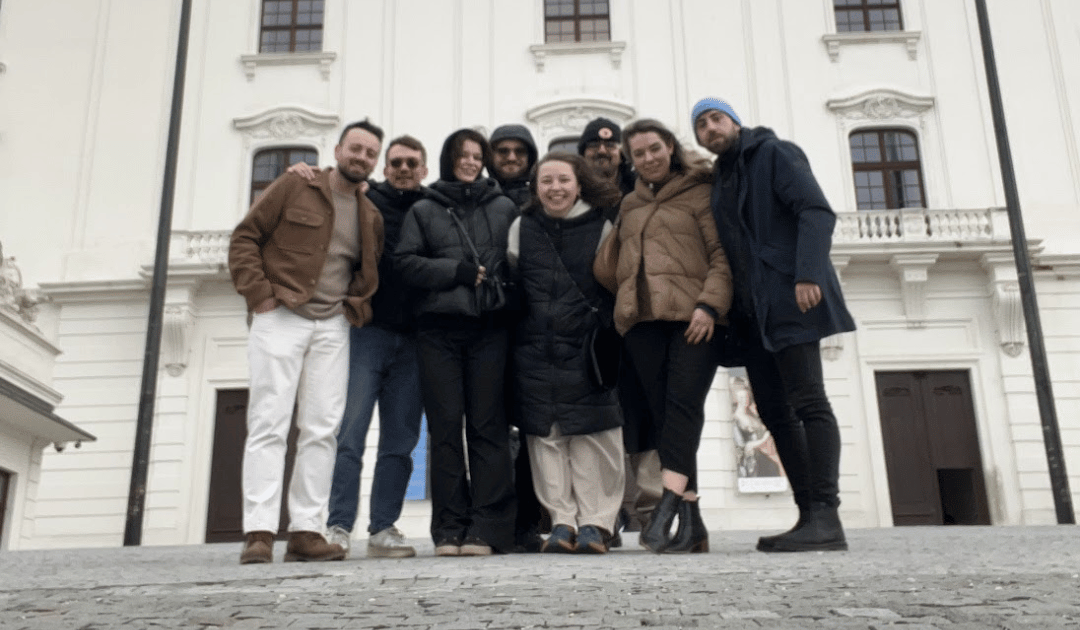
The friendship that doesn't expire
Erasmus friendships don't have an expiration date. They just need a moment and a place to come back to life.
Maybe that moment is a reunion in the city where it all started, walking the same streets and laughing at the same memories. Maybe it's a new city, discovering something together all over again. Maybe it's a weekend with an international group of people who share the same desire for connection, spontaneity, and a life that feels a little more like it did during the best months of your life.
Whatever form it takes — don't stop looking for it.
Because that feeling was real. And it still is.