
How Localizing Started: An Erasmus Story
How Localizing Started: An Erasmus Story
I've been trying to write this for a while. Not because the story is complicated, but because it's personal, and personal things are harder to put into words when you know other people will read them.
But if Localizing is going to mean anything beyond a website and a few trips, you should probably know where it came from.
So here it is.
Bratislava, 2018
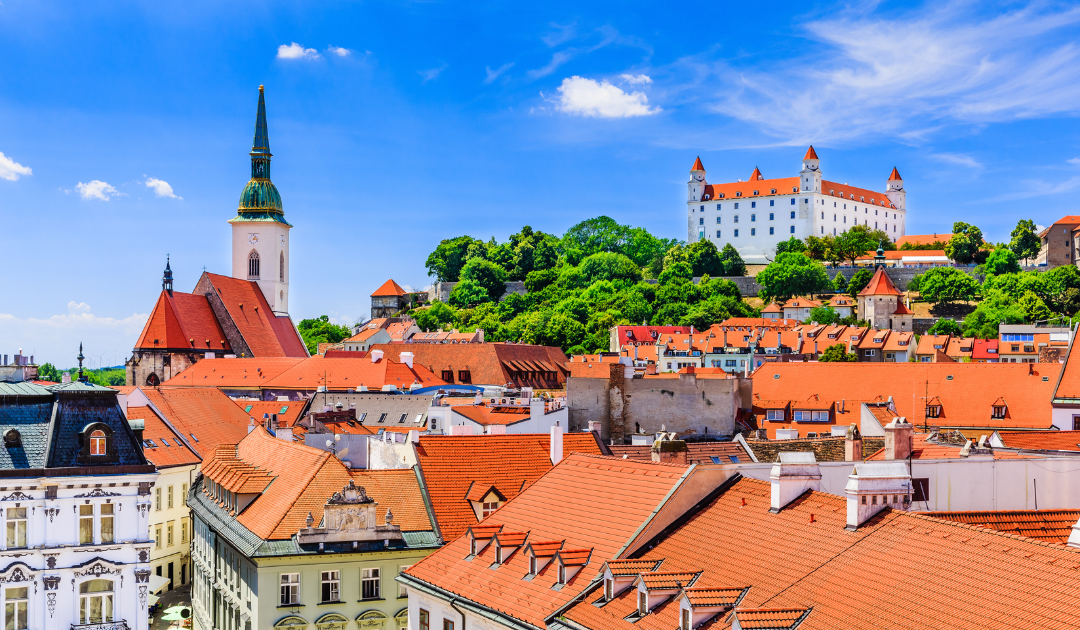
I arrived in Bratislava in September 2018 with a suitcase and no idea what was waiting for me.
I was 22. I had never lived abroad. My English was decent but far from fluent, and the only thing I knew about Slovakia was that it existed and that it was probably cold. I had signed up for Erasmus because everyone said it would change my life, and I believed them in the way you believe something without really understanding what it means.
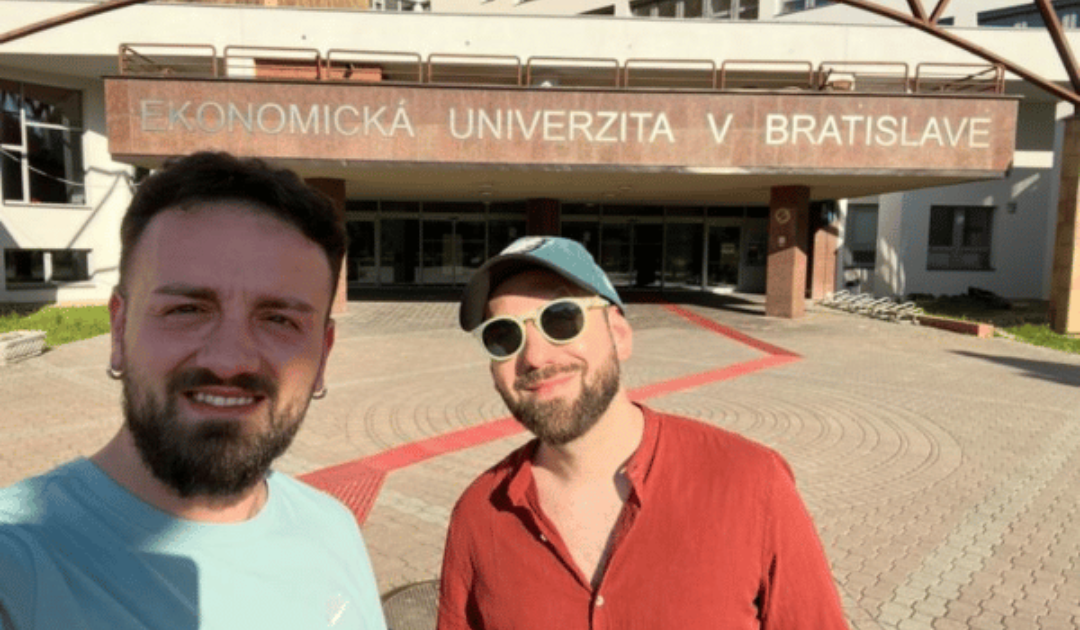
The first few days were spent in a hotel. I didn't have a house yet, I had chosen to look for an apartment instead of going for the university dorm, but that meant I arrived with nowhere to live. I had one single appointment to see a flat, in Petržalka, a residential area close to our university, the Ekonomická Univerzita, but not exactly the best neighborhood for going out at night.
I showed up to see the apartment. And there, at the same time, with an appointment for the same flat, was Lorenzo.
We could have become flatmates right there. The apartment was for four people, and there was room for both of us. But Lorenzo, who had been far more organized than me, had already seen another place. A flat in a better area, somewhere between Ružinov and the city center, much better for our social life, though significantly worse for our wallets and our livers.
He showed me the photos. "Trust me," he said. "This one's better."
I had never met this person before. I had no reason to trust him. But something about the way he said it made me think: "Why not?"
I said yes. We became flatmates. And that decision started everything.
When strangers become family
That's the thing about Erasmus that nobody prepares you for: it doesn't build slowly. It hits you all at once.
One day you're alone in a foreign city, and the next you're surrounded by people from six different countries who feel like they've known you forever. You cook together, go out together, get lost together, figure things out together. You speak in a mix of three languages and somehow everyone understands.
Lorenzo and I lived the classic Erasmus life in Bratislava. International dinners in our kitchen. Spontaneous road trips to Vienna because someone said "let's go" at 10 PM on a Tuesday. Nights in bars we discovered by accident. Conversations at 3 AM about things we'd never talked about with anyone back home. The kind of friendships that build in weeks what normally takes years.
I didn't know it at the time, but Erasmus changed my life. Not in the dramatic way people sometimes mean, it didn't give me a new career or a revelation about my future. It changed something quieter and deeper: it changed what I think a good life feels like.
A good life, I realized, feels like that. Like being surrounded by people from everywhere, in a city you're still discovering, with no plan except to be open to whatever happens. It feels like connection without effort. Like belonging somewhere you've never been before.
The part nobody talks about
And then it ended.
We went back to Italy. Different cities, different routines, different lives. The group chat that used to get 200 messages a day slowed to a few per week, then a few per month. Everyone was back in their own world, and that world, the normal one, the one with a job and a schedule and people who spoke your language, suddenly felt smaller.
That's when the erasmus nostalgia hit.
Not right away. At first it was just a vague feeling, something missing that I couldn't name. But over the following months it became clearer. I missed the people, yes. But more than that, I missed the context. The version of life where every night could become an adventure. Where you're surrounded by different perspectives. Where you feel like you're growing just by being there.
I tried to recreate it. I really did. Language exchanges, expat meetups, trips with old Erasmus friends, international events in my city. Some of them were good. None of them were the same. The format was wrong, the energy was different, the spontaneity was missing. You can't recreate Erasmus by scheduling a meetup on a Wednesday evening in a bar where everyone speaks the same language.
Lorenzo felt the same. Every time we called each other, the conversation would drift back to Bratislava. "Remember that bar?" "Remember that night?" We weren't trying to plan anything. We were just two people who shared something important and couldn't stop going back to it.
And every now and then, that nostalgia would hit again, and one of us would send a message in the old WhatsApp group: a photo, a memory, a "do you guys remember when…". And for a few minutes, it felt like we were back.
Life after Erasmus has this quiet ache to it. You're grateful for the experience, but you can't shake the feeling that something fundamental is missing. You've seen what life can feel like at its most open, most international, most spontaneous, and then you're supposed to just go back to normal and be fine with it.
I wasn't fine with it.
The espresso, the croissant, and the spark
April 2025. We had organized a reunion in Bratislava with some Erasmus friends.
Before flying to Slovakia, I stopped in Rotterdam to visit Lorenzo, he works there now. A few days together, then off to Bratislava.
Once there, we met old friends - Turkish, Finnish, Hungarian, Slovak - apart for years, but still connected by that Erasmus bond that doesn't care about time or distance. We also met new people: Slovak friends, a group of Italians working in the city. Conversations, stories, laughter. We still keep in touch with some of them today. Once again, different people meeting and connecting as if it were the most natural thing in the world.
The next morning, we went back to a bar downtown we used to go to often, run by Italo-Croatians, best espresso in Bratislava and a buttery croissant you can't forget. We walked in and sat at the first table on the left.
I was telling Lorenzo about a perfume e-commerce idea I was working on at the time. And while we were talking, that nostalgia hit again, but differently. Not as sadness. As a realization.
"Vale, this reunion almost feels like being back in Erasmus. Even if just for a weekend."
And that's when it happened.
"Lore, what if we tried to create mini-Erasmus experiences? It won't be the real thing, but we could recreate the key elements: European trips, an international group, a city to explore like locals, and genuine connections forming along the way."
It was still a rough idea. But the moment was crystal clear.
We looked at each other and said: "When we're back, let's work on this for real."
Later that same week, casually in a bar, we met Katka - a Slovak girl, warm, funny, full of energy. We got talking about Bratislava, about what makes a city feel alive, about the difference between visiting a place and actually knowing it. We didn't know it yet, but she would become our first Local Coordinator.
The first trip
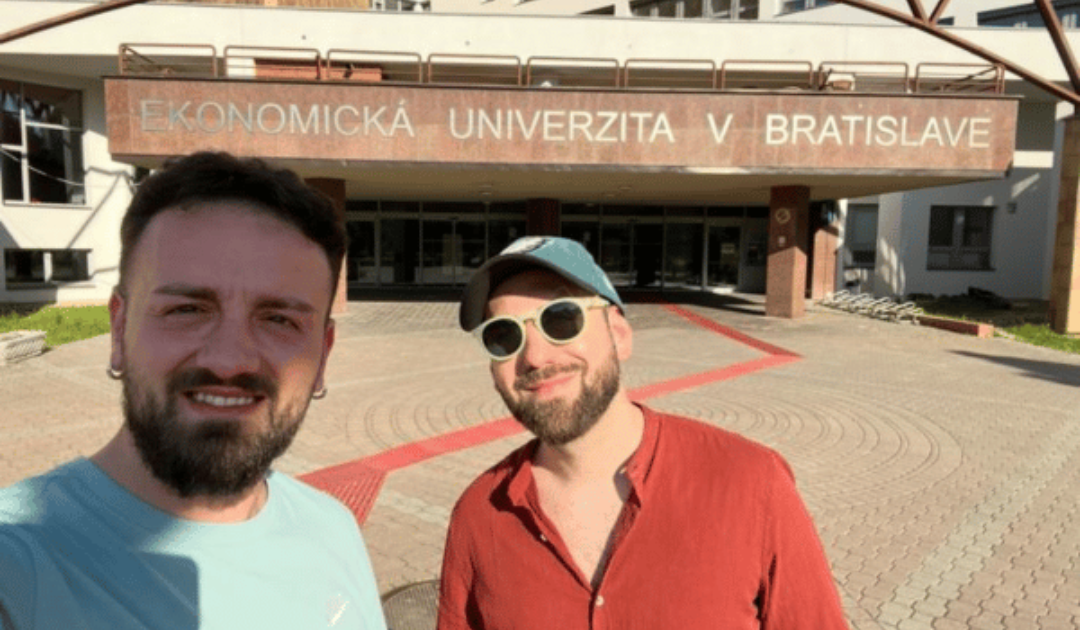
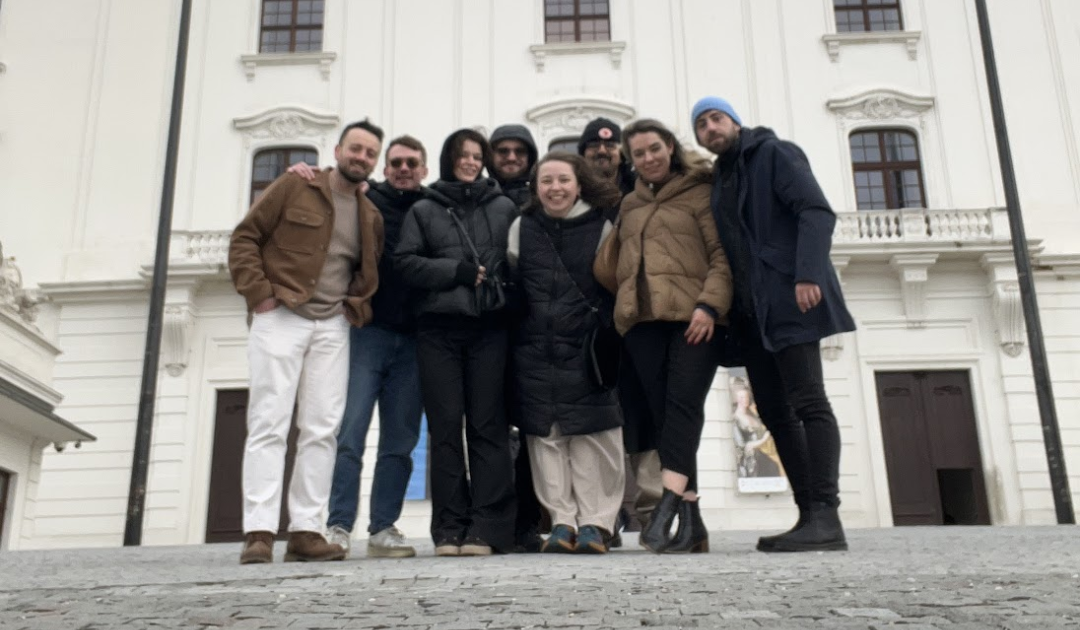
The first Localizing trip happened in Bratislava in early 2026. It had to be there not because we needed to discover the city, but because we already knew it. We knew the bars, the streets, the food, the rhythm. What we didn't know was whether the format would actually work with a group of strangers.
A small group, international, from different countries. Katka as Local Coordinator. Activities designed not to fill time, but to create interaction: a welcome aperitif, icebreakers, a Barathon through Slovak bars with challenges, an interactive city tour, an international gift exchange.
I was terrified it wouldn't work. That the group wouldn't click. That the activities would feel forced. That people would be polite for three days and then leave thinking "that was fine, I guess."
None of that happened.
What happened was that strangers became a crew within hours. People were laughing together at dinner like they'd known each other for years. The Barathon turned into a night that people still talk about. The gift exchange - which I was most nervous about - became the most emotional moment of the trip.
We got five reviews. All five stars. Every single one.
Where we are now
I'd love to say that after Bratislava everything was clear and confident and upward. It wasn't.
We did a second trip in Benevento, my hometown in southern Italy. A completely different vibe: a private villa, a ghost town visit, pasta with Italian grandmothers, olive oil tastings. We wanted to test whether the format worked in a less obvious city, one that no 25-year-old European would normally pick for a weekend trip. It worked. Because it was never about the city. It was about the group.
Now we're a community of +500 people from different countries. We have more trips coming. We have an app. We have ideas that keep us up at night and doubts that keep us up even later.
But the thing that drives everything - the thing that made us start this and the thing that keeps us going when it gets hard - is still the same feeling from 2018. That feeling of sitting in our kitchen in Bratislava with people from five countries, eating something someone cooked, laughing about something that only makes sense in that room, in that moment, with those people.
That's what erasmus nostalgia is. It's not missing a place. It's missing a way of being alive.
Why I'm telling you this
Because if you've felt it too, you already understand everything about this project.
You don't need me to explain what Localizing is. You don't need a list of features or a sales pitch. You felt that thing - that mix of freedom, connection, internationality, and aliveness - and at some point it ended, and you've been carrying a quiet version of it ever since.
This project is for you. Not as a customer. As someone who gets it.
We're still small. We're still figuring things out. We make mistakes, we change plans, we sometimes wonder if we're crazy for trying to build something around a feeling.
But then someone sends us a message saying "I felt like I was on Erasmus again" and we remember why we started.
Erasmus changed my life. Not because of what it gave me, but because of what it showed me life could feel like.
Localizing is our attempt to make sure that feeling doesn't stay in the past.
And if you're reading this and something resonated, you're already part of it.
Valerio